Dr. Rezazadeh Yazdeli’s writing spans scholarly, educational, and literary contexts, each of which makes different demands on evidence and expression. While academic work requires conceptual precision and careful qualification, educational writing seeks to relate knowledge to the circumstances of learners and families. Poetry approaches human experience through a different form of attention. These forms remain distinct in his work, although their underlying concerns may be understood as related.
Scholarship, educational writing and poetry are presented as separate but connected parts of one writing practice.
An educational work concerned with talent, development, educational choice and the conditions under which potential becomes a meaningful pathway rather than a fixed label. Its educational philosophy is already published on this site as a public statement of the book’s underlying view of learning and human development.
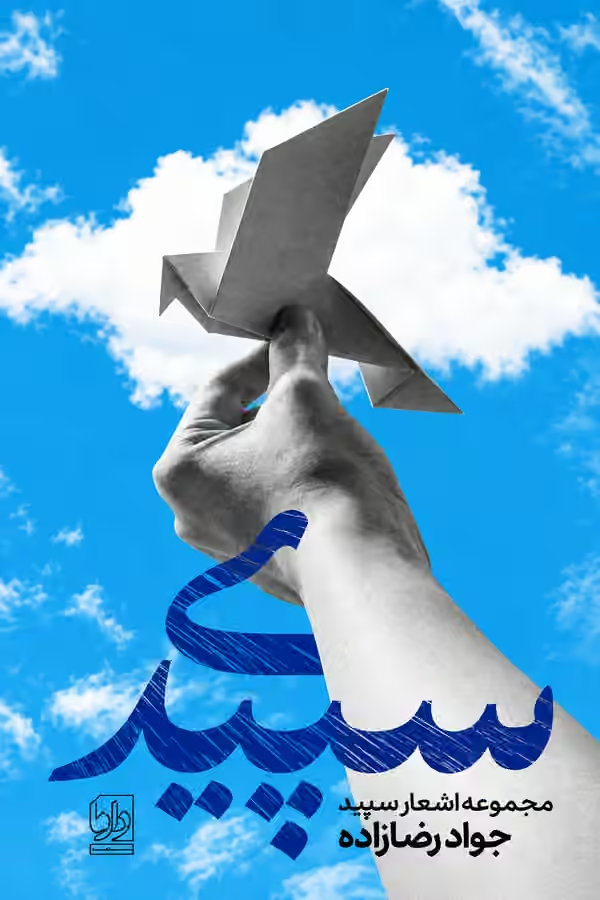
A Persian literary work in preparation. It belongs to the literary rather than academic dimension of Dr. Rezazadeh Yazdeli’s writing and is being developed as an independent book rather than incorporated into the educational programme.
Distinct forms of authorship
Why scholarly, educational and literary books are presented separately
Different genres invite different expectations of evidence and interpretation. A research publication must allow readers to examine its sources, methods and claims. A practical educational book may draw on scholarship while translating complex ideas into questions and decisions that matter to families and teachers; its recommendations should still distinguish evidence from professional judgement. Poetry, by contrast, need not be reduced to an empirical proposition to have intellectual or human significance.
Maintaining these distinctions is particularly important for works in preparation. A working title, a developing manuscript or a proposed publishing arrangement is not equivalent to a published book. This page therefore separates completed poetry collections from ongoing educational and literary projects and avoids assigning unverified publication details to either.
Forthcoming works
Publication details will follow each work as it reaches its final form.
Bibliographic and publication information for works currently in preparation will be added as their publication arrangements are finalised.
Educational writing must remain accountable to both experience and evidence
Writing about learning and talent requires a form of explanation that readers can relate to their lives without confusing personal reflection with scientific proof. The book project «کشف مسیر طلایی استعداد» is concerned with this tension. It brings questions about self-understanding, learning strategies, error, motivation and educational choice into dialogue with practical activities, while recognising that a learner's development cannot be captured by a single result or predetermined pathway.
RCAS is intended to structure the initial evidence, BAHAR to support cycles of action and review, and Golden Path to make alternative routes open to experience and reconsideration. These are components of the author's proposed educational architecture and are not presented as already validated diagnostic instruments. The publication status and bibliographic details of each book should remain explicit and independently verifiable.
For a fuller account of the proposed framework and its limitations, see Golden Talent and the methodology.
In press · Persian scholarly edition
How Languages Are Learned — Persian comparative extension
In press; not for sale
چگونه زبانها آموخته میشوند
A scholarly translation and independently authored comparative extension based on Lightbown and Spada’s fifth edition (2021), with a focus on children’s Persian-language development. Publisher and release details remain unconfirmed.